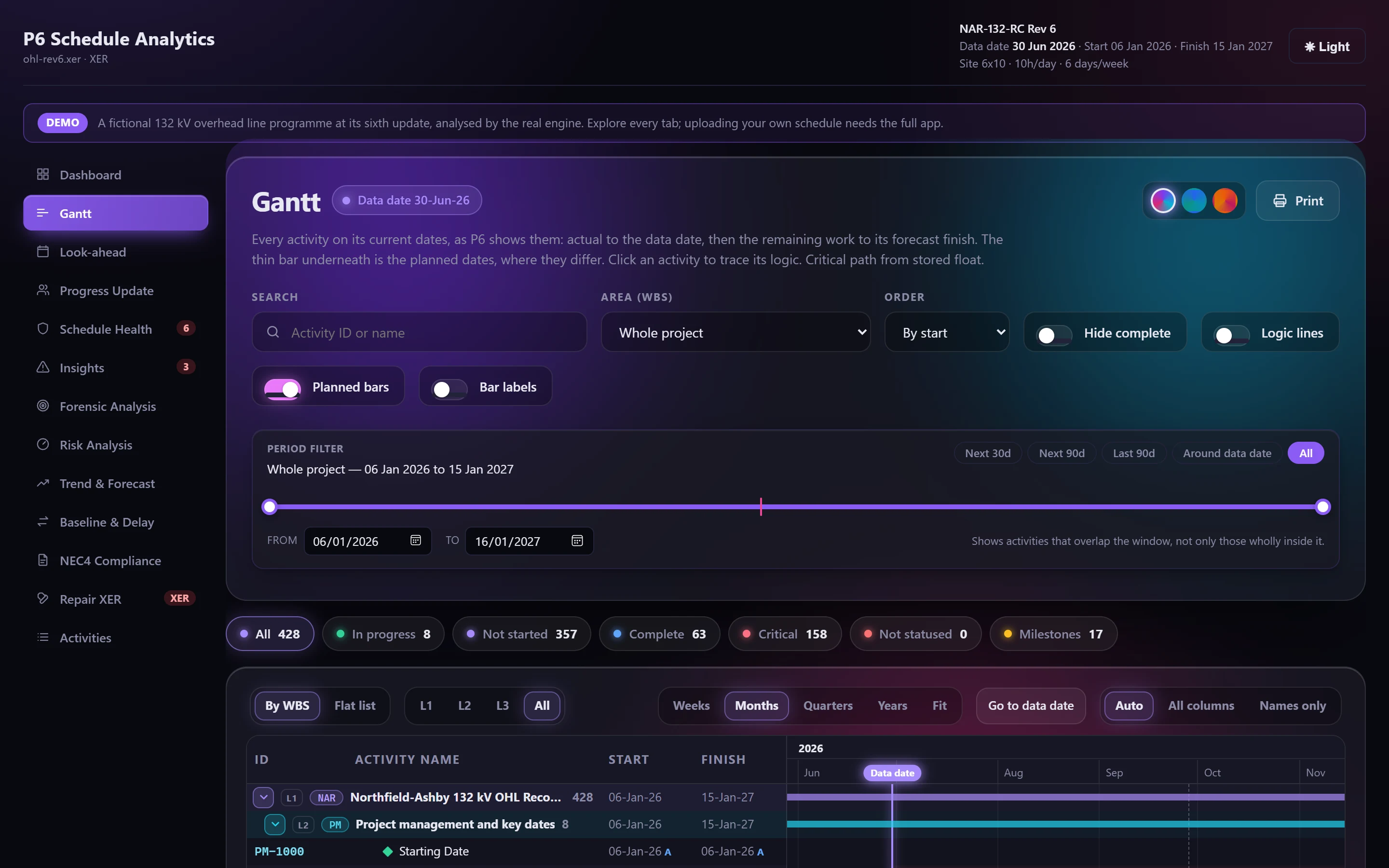
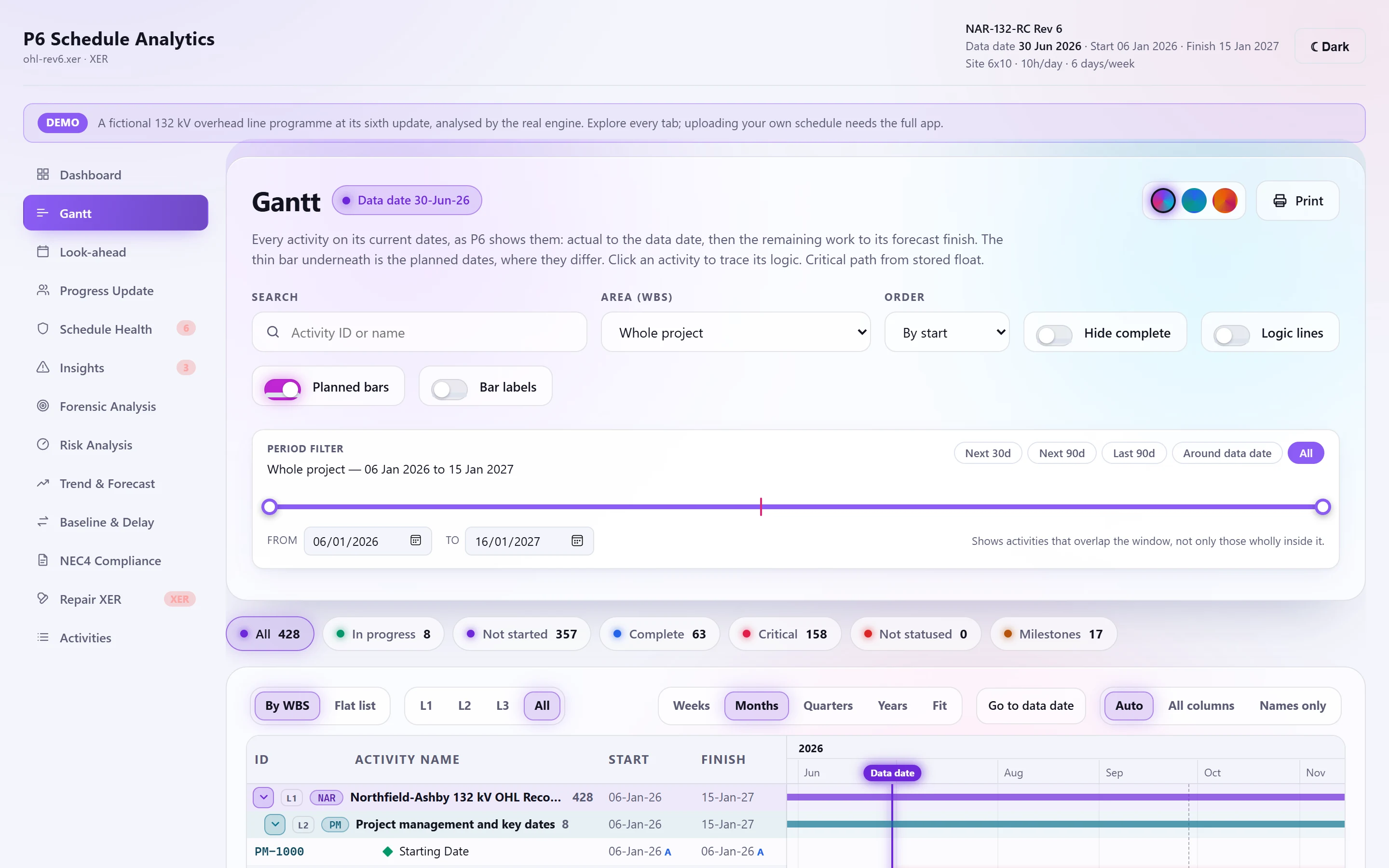
An independent forward and backward pass in real dates. Each activity advances on its own calendar and each lag on its predecessor's, completed work is pinned to its actual dates, and the Gantt shows the result in the layout planners already read, with the baseline beneath every bar.
What it gives you
When stored float is stale, the critical path is recomputed from the logic instead of marking the whole job critical.
Compare with the baseline or the NEC4 Accepted Programme: a second bar under each activity, with the slip in working days.
A pulse runs along each logic line from predecessor to successor, faster on critical logic.
The path that drives Completion, tie by tie.
The last links of the demo programme's driving path: Section 3 back in service, the access tracks reinstated, snagging and handover, then Completion. Driving ties carry the light; dashed ties feed in with float to spare. Each box shows its total float in working days: the whole path is late.
In the app, the logic trace opens from any activity and follows its drivers up and its successors down, laid out by the same dagre engine as this drawing.
Why recompute at all
An export carries whatever late dates were stored at the last F9. If the file wasn't rescheduled against its data date, those dates describe a plan that no longer exists. The engine detects this, recomputes float from the network, and tells you which basis it used.
The Gantt, as P6 draws it
- Collapsible WBS tree with summary bars; ID, name, remaining duration, start, finish and total float.
- Blue actual to the data date, green remaining, red when critical, with the planned or baseline dates as a thin bar underneath.
- Time risk allowances hatched, read from their names or the contract's own convention.
- Weeks, months, quarters, years or fit, and a jump to the data date.
Check your next update before anyone else does.
Free for a day. Export an XER from P6 and see what it says.